Visit Lisbon

Europe's leading city destination in 2023

Why Lisbon?

If you’re dreaming about your next trip to Europe, come and discover Lisbon, a historical city full of stories to tell, where the sun shines 290 days a year and the temperature rarely drops below 15oC. A city where you feel safe wandering around day or night, where the cuisine is dedicated to creating over a thousand ways to cook the beloved bacalhau (salted cod), and where you’ll find hotels and restaurants to suit every taste, budget and requirement. Discover Lisbon, a city full of authenticity where old customs and ancient history intermix with cultural entertainment and hi-tech innovation. Lisbon is ageless, but it loves company, as you’ll find out if you meet someone and ask them to explain, with lots of gestures and repetition, where the best place is to listen to Fado. After all, Lisbon is famous for its hospitality and the family-like way it welcomes visitors.

Alfama

Alfama

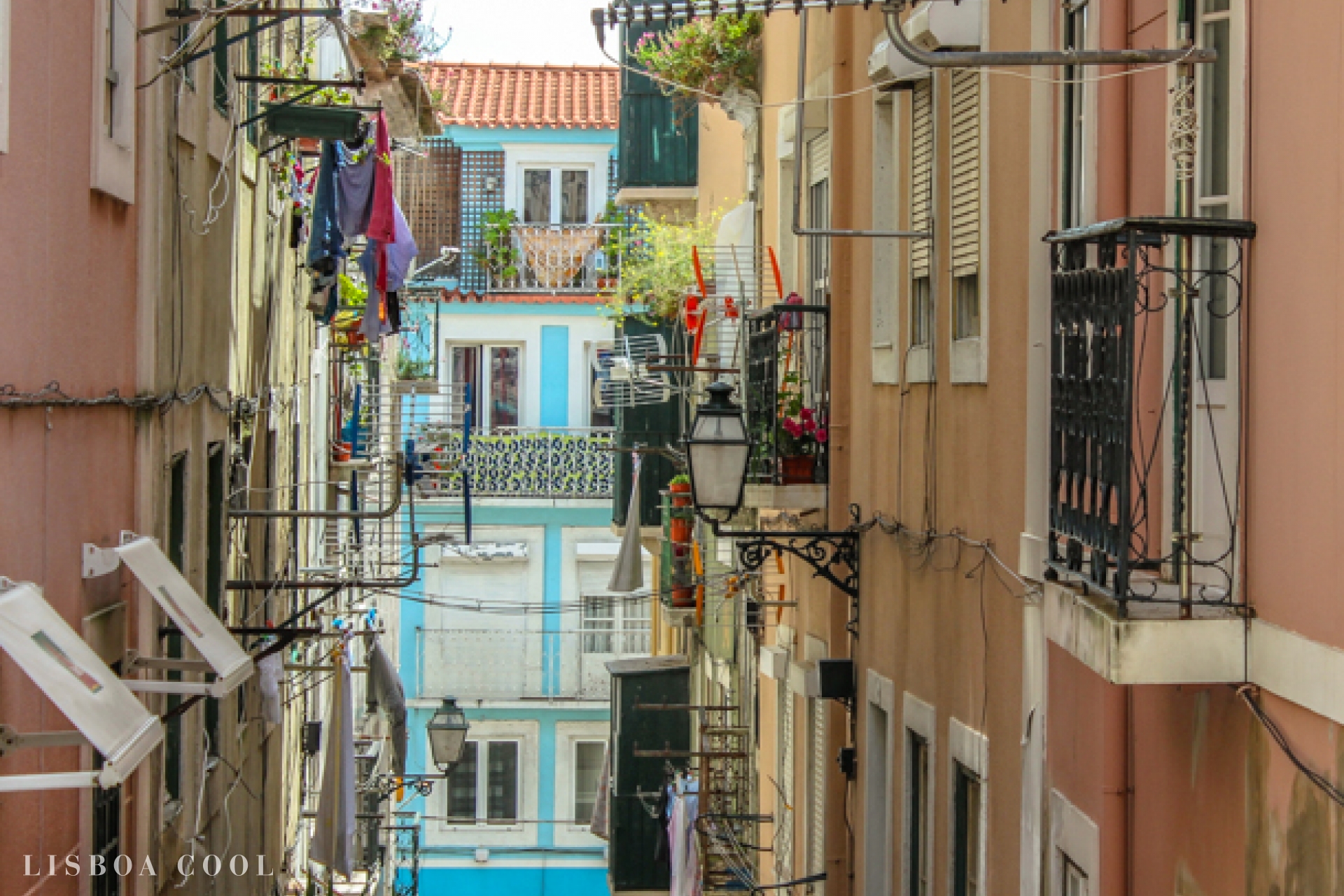
Village-like Alfama is one of Europe’s oldest neighborhoods. It was settled as far back as the Iron Age, and later occupied by the Romans, Visigoths and other Germanic tribes, before becoming the heart of Moorish Lisbon. With the conquest of the city by Portugal’s first king in 1147, the Moors were either killed in the siege or segregated in Mouraria, and Alfama became home to the upper classes. It was also the Jewish quarter, until the Jews were expelled (together with all other non-Christians who didn’t convert) in 1497. As Lisbon expanded, the wealthy residents moved west, leaving Alfama to the fishing community. A must do is a visit to St George's caslte. Crowning Lisbon for over a millennium, this castle offers breathtaking views of the city draped over its series of hills. Peacocks roam around the landscaped area around the towers, which house a small museum displaying pieces dating back to the site’s Moorish occupation. Within the restored walls is also a tiny picturesque neighborhood.
Bairro Alto

Bairro Alto

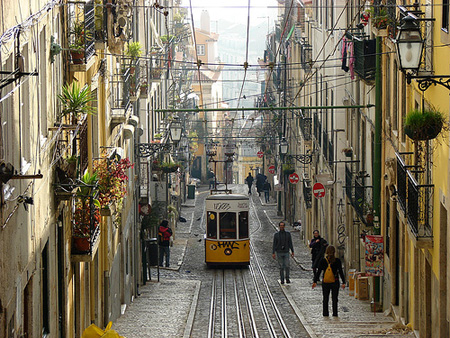
Literally “upper neighborhood,” Bairro Alto sits at the top of a hill, and is the most “recent” of Lisbon’s old quarters. Laid out in 1513, it was the city’s first planned district, with a small grid of narrow streets outside the medieval wall that stood where you now see the two churches in Praça Luís de Camões. It was the neighborhood of merchants and aristocrats, but by the late 1800s it was home to several newspaper offices -- two streets are even named after periodicals (Rua do Diário de Notícias and Rua de O Século). Then came the bars to serve the journalists who left work late at night, and those were followed by brothels. Soon Bairro Alto became synonymous with a bohemian lifestyle, and by the 1980s it was where everyone went to in the late hours, creating street parties every Friday and Saturday night. Those continue to this day, although many of the night owls have moved down to the waterfront, in Cais do Sodré. It still has a variety of restaurants and bars, and although it no longer mixes different urban tribes, you still see people of all ages, straight and gay, bar-hopping and drinking on the streets.

Belem

Belem

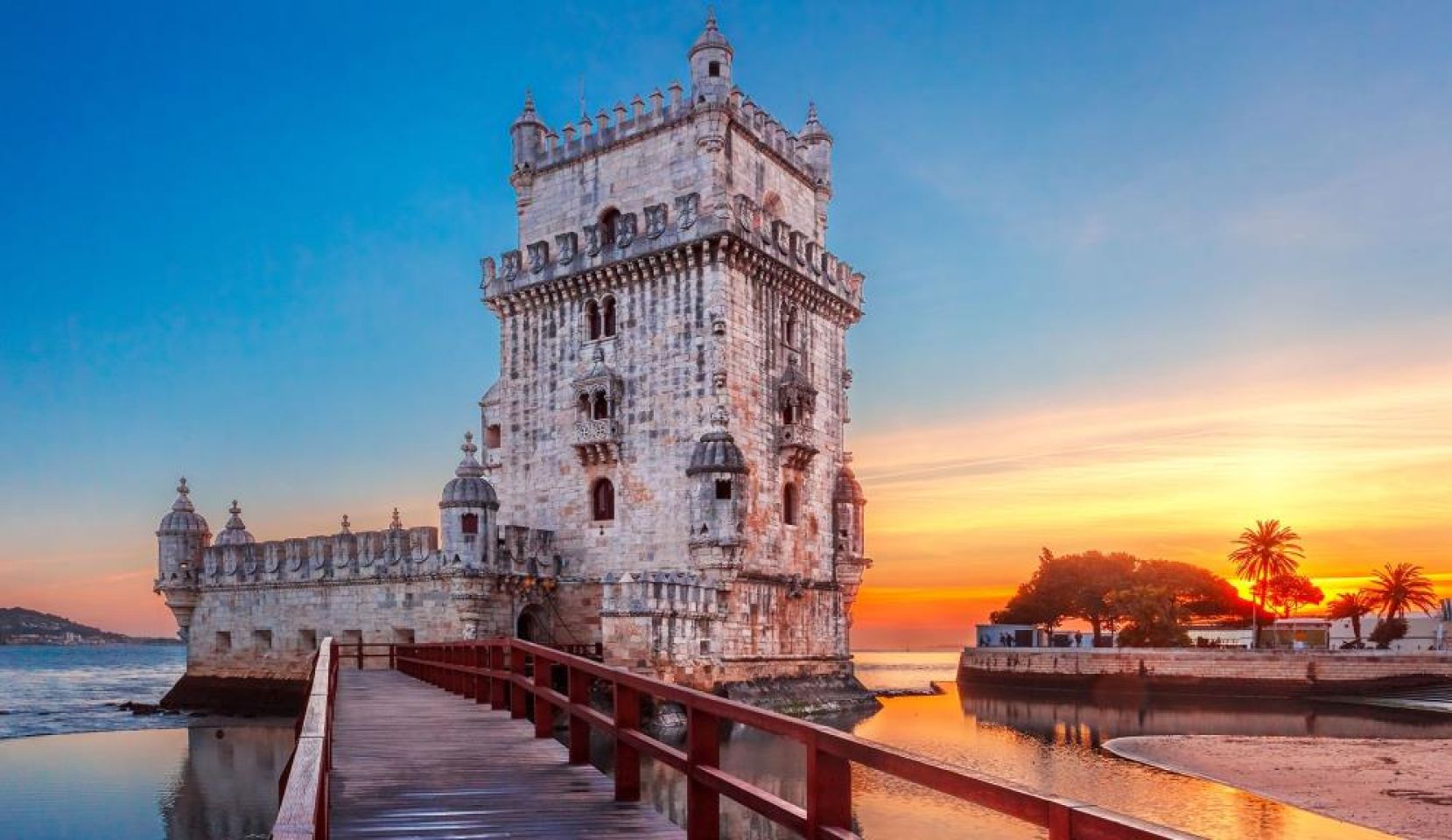
Head west of the city centre to a corner of Lisbon that’s at the heart of Portuguese history. Near the mouth of the River Tagus, Belém is the site of maritime legends, the birthplace of the pastel de nata (custard tart) and home of some of Portugal’s most important museums and galleries. It was from here in the 15th century (Portugal’s Age of Discovery) that explorer Vasco da Gama set sail for India, returning with treasures that ultimately funded Belém’s extravagant buildings and helped establish Portugal as a global power. However, Belém doesn’t lean on its history and monuments to form an identity, it’s also an essential stop for those interested in understanding modern Portugal, from cutting-edge cultural institutions to food you won’t find anywhere else. With Culture Trip, you can enjoy a guided walking tour of Belém as part of our specially curated small-group Portugal trip, led by our local insider.

Baixa

Baixa

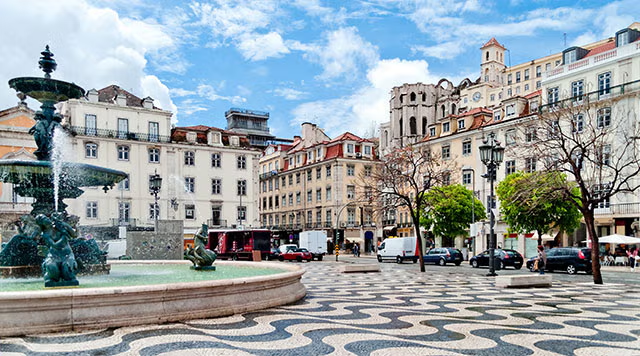
Nestled between the city’s two tallest hills, downtown Lisbon is a contrast to the old quarters’ mazes of narrow lanes. Following the Enlightenment ideals of order and elegance, it’s an orderly grid of wide streets, laid out after most of the area was devastated by the Great Earthquake of 1755. It was quite revolutionary at the time, for the width of the streets and for essentially being one big shopping mall, clustering different trades. There’s Rua do Ouro (the “Street of Gold”) for goldsmiths, Rua da Prata (“Silver Street”) for jewelers, Rua dos Sapateiros (“Shoemakers Street”), and others that survive to this day, although, of course, the businesses are quite different. Most shops are international chains, and many of the buildings are hotels. It’s the most touristy part of town, with the city’s main pedestrian street (Rua Augusta) linking the grand 18th-century squares.

Chiado

Chiado

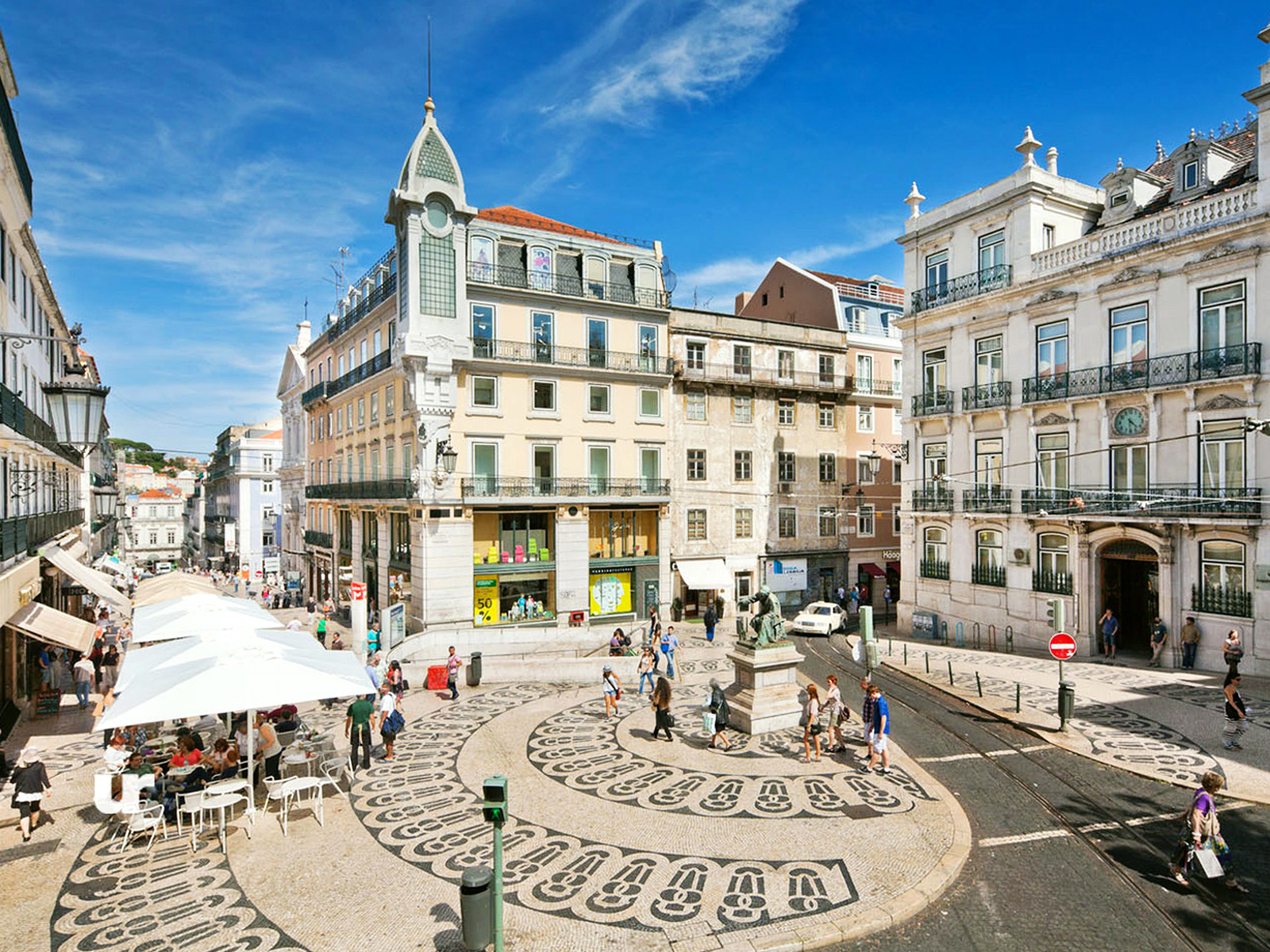
Lisbon's most elegant neighborhood is where everyone meets for coffee, shopping, or before a night out in neighboring Bairro Alto. Most of the buildings are from the late 1700s, but many were restored and altered in the 1990s by Pritzker Prize architect Álvaro Siza Vieira, after a devastating fire in 1988. It's a neighborhood that flashes back to the late 19th and early 20th centuries, the "Belle Époque" when writers such as Fernando Pessoa and Eça de Queiroz used to write at the now-historic cafés. One of the most photographed buildings is from 1863, and it faces one of the main squares, Largo Rafael Bordalo Pinheiro. It’s covered in tiles illustrating mythological figures representing Earth, Water, Science, Agriculture, Commerce and Industry, and at the top is the Eye of Providence. This is also the neighborhood of classic theaters, bookshops (including the world’s oldest), sophisticated restaurants and Michelin stars, and the stores of international brands, giving it a lively cosmopolitan ambience at any time of the day.